EcoClimate Variability Lab

Facilites


The Earth & Climate Variability Lab is a fully equipped organic geochemistry facility housed in the University of Georgia's Center for Applied Isotope Studies. Our comprehensive facilities include all instruments, materials, and equipment needed to extract, purify, quantify, and measure a variety of organic biomarkers. This includes ample fume hood space that is spread out across the building.

We specialize in compound-specific isotope analysis, currently offering hydrogen and carbon isotope measurements with the capability to extend our services to nitrogen and oxygen isotopes. While our primary focus is on leaf waxes, we also have extensive experience with glycerol dialkyl glycerol tetraethers (GDGTs) and can quantify sea surface temperatures using the alkenone paleothermometer.

We are always eager to collaborate, so please feel free to reach out with any questions about our capabilities or potential projects!

Outside of our analytical facilities, our climate model analyses and data syntheses are supported by the Georgia Advanced Computing Resource Center's Sapelo2 computing cluster. While this high-performance computing cluster offers various configurations, we primarily utilize the high memory nodes.
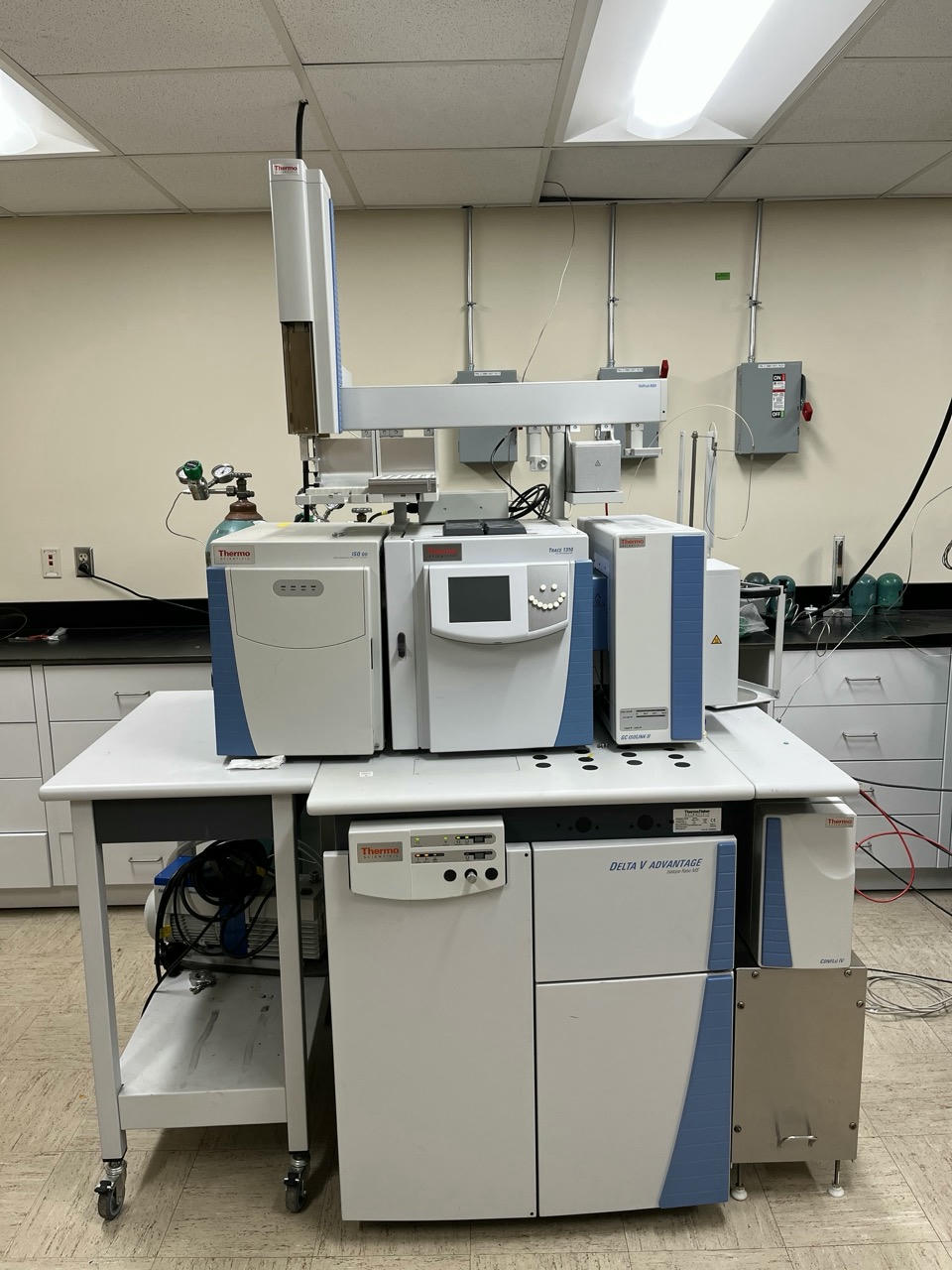
GC-IRMS

Trace 1310 - GC Isolink II - Conflo IV - Delta V Advantage

Coke

This instrument enables compound-specific isotopic measurements and is currently configured to analyze hydrogen and carbon isotopes in leaf waxes (n-alkanes and n-alkanoic acids) with 20-30 carbon chains. The system includes a TriPlus RSH autosampler and can also perform nitrogen and oxygen isotopic measurements when needed. While not currently connected, it can be paired with an ISQ-QD mass spectrometer to simultaneously identify compound structures and determine their isotopic composition.

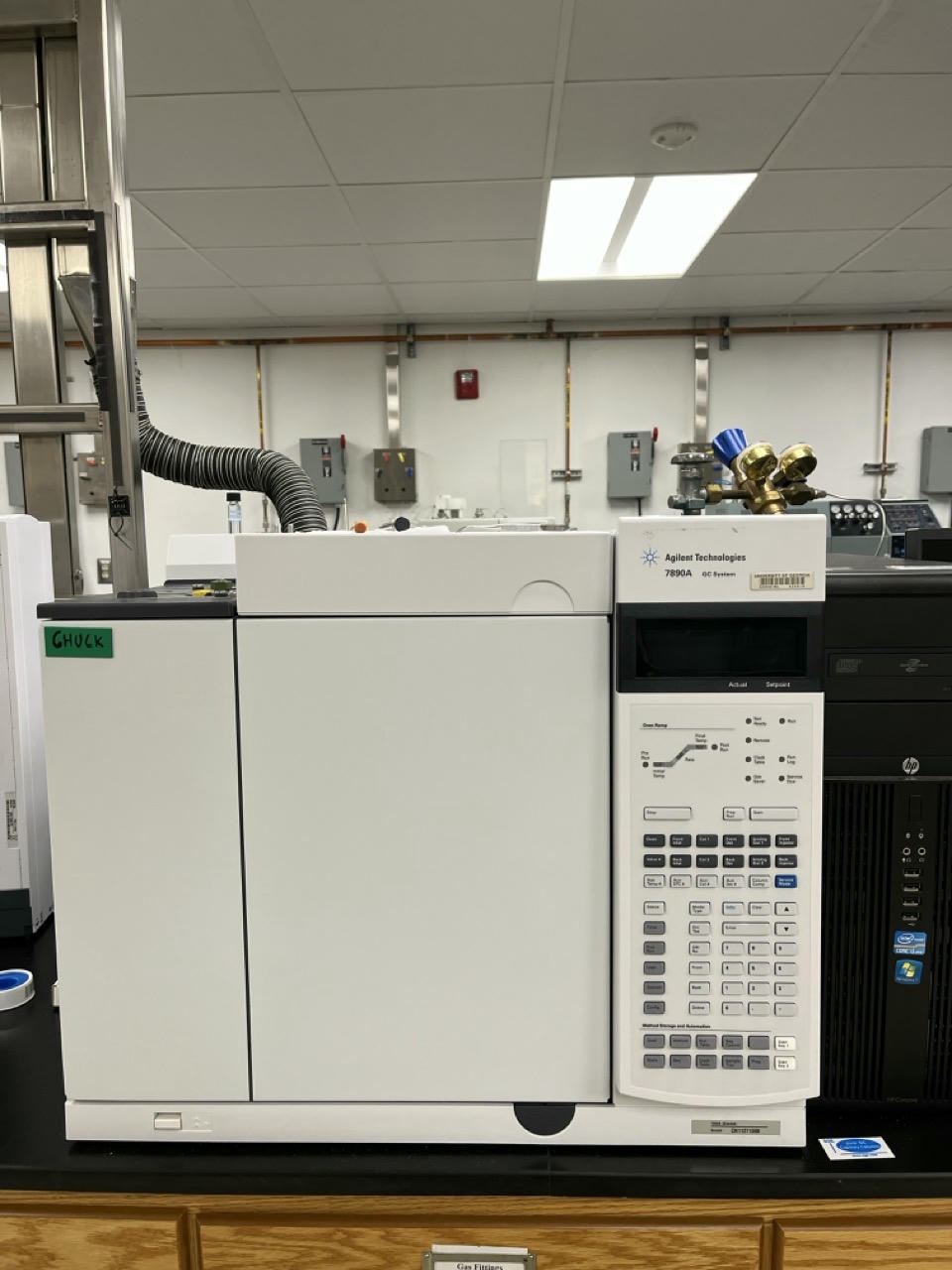
GC-FID

Agilent 7890A GC-FID

Chuck

This instrument quantifies target compound abundances before isotopic measurement, making it the workhorse of our lab. Regardless of which compounds we're analyzing, we always identify and quantify them on this instrument first.

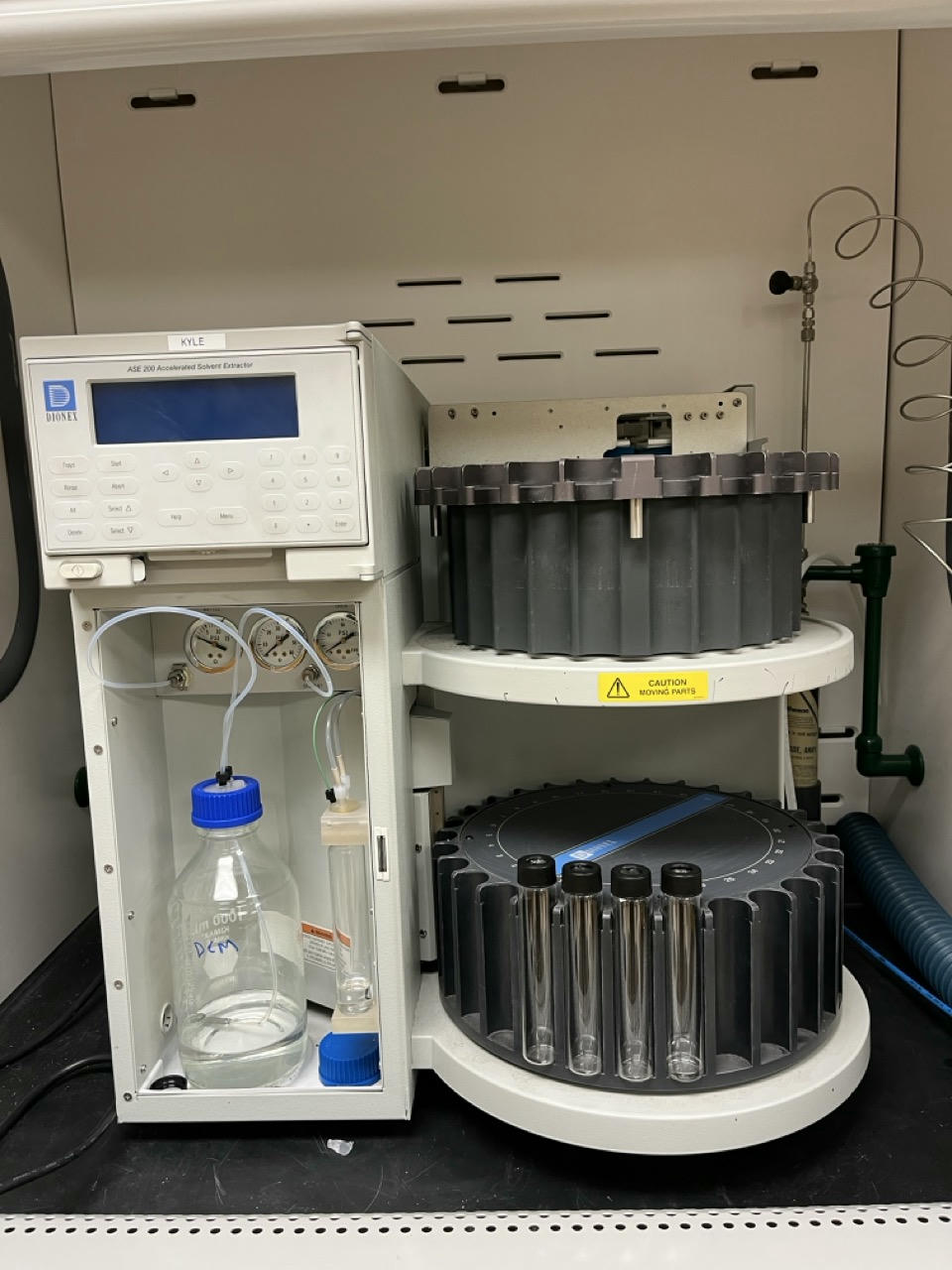
Dionex ASE 200

Dionex ASE 200

Kyle and ASE2 (not pictured)

This instrument is our primary method for extracting organic lipids from sediments. It operates like an espresso maker, using pressure and solvent to extract organic compounds from sediment samples. While Kyle and ASE2 may be as old as the lab PI, both instruments still work wonderfully.

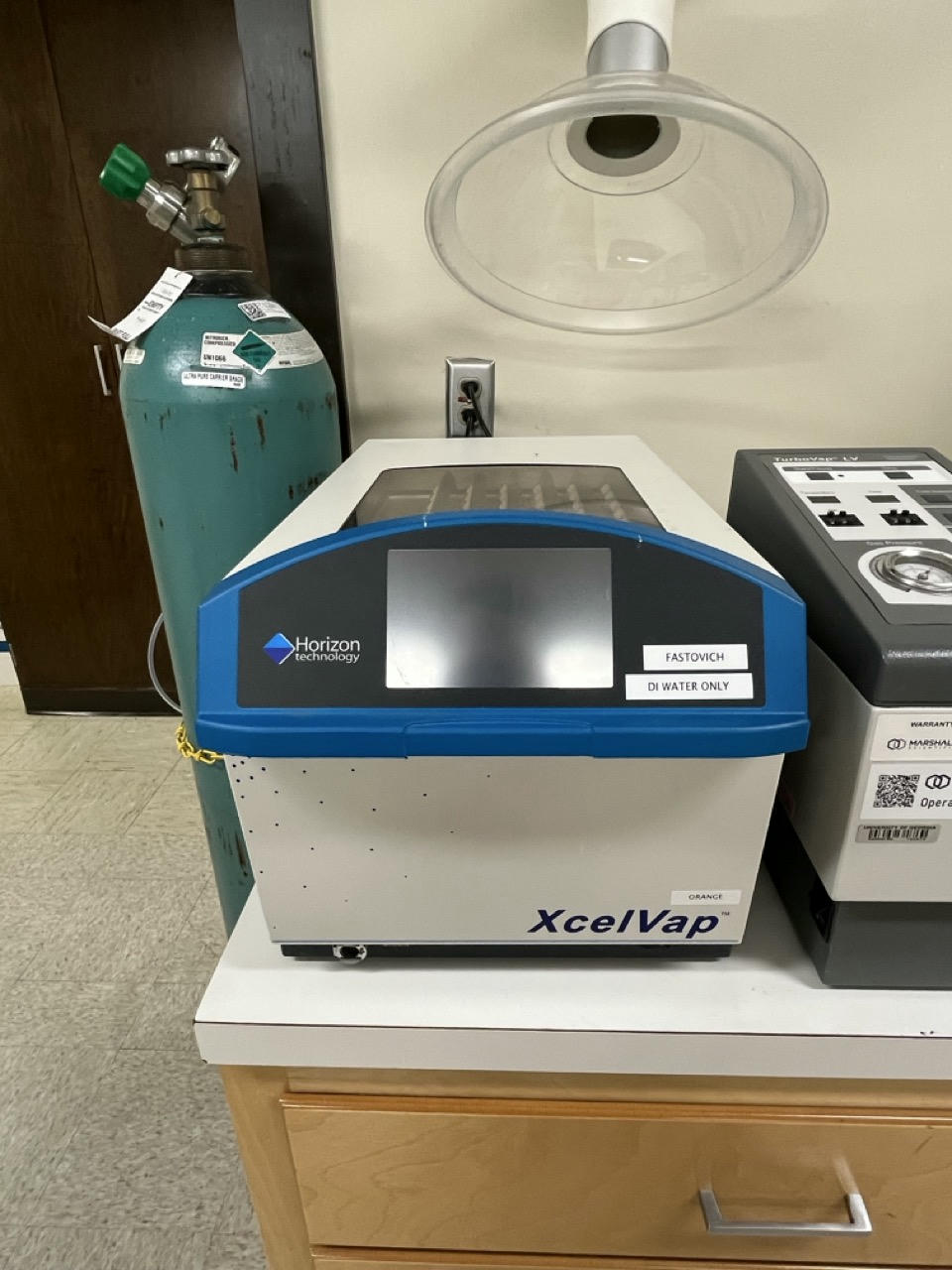
Horizon TurboVap

Horizon XcelVap

Orange

This instrument quickly and cleanly dries down solvents that come off the ASE 200's. It has a smaller sibling (FlexiVap Workstation) that is used for drying smaller volumes of solvents.

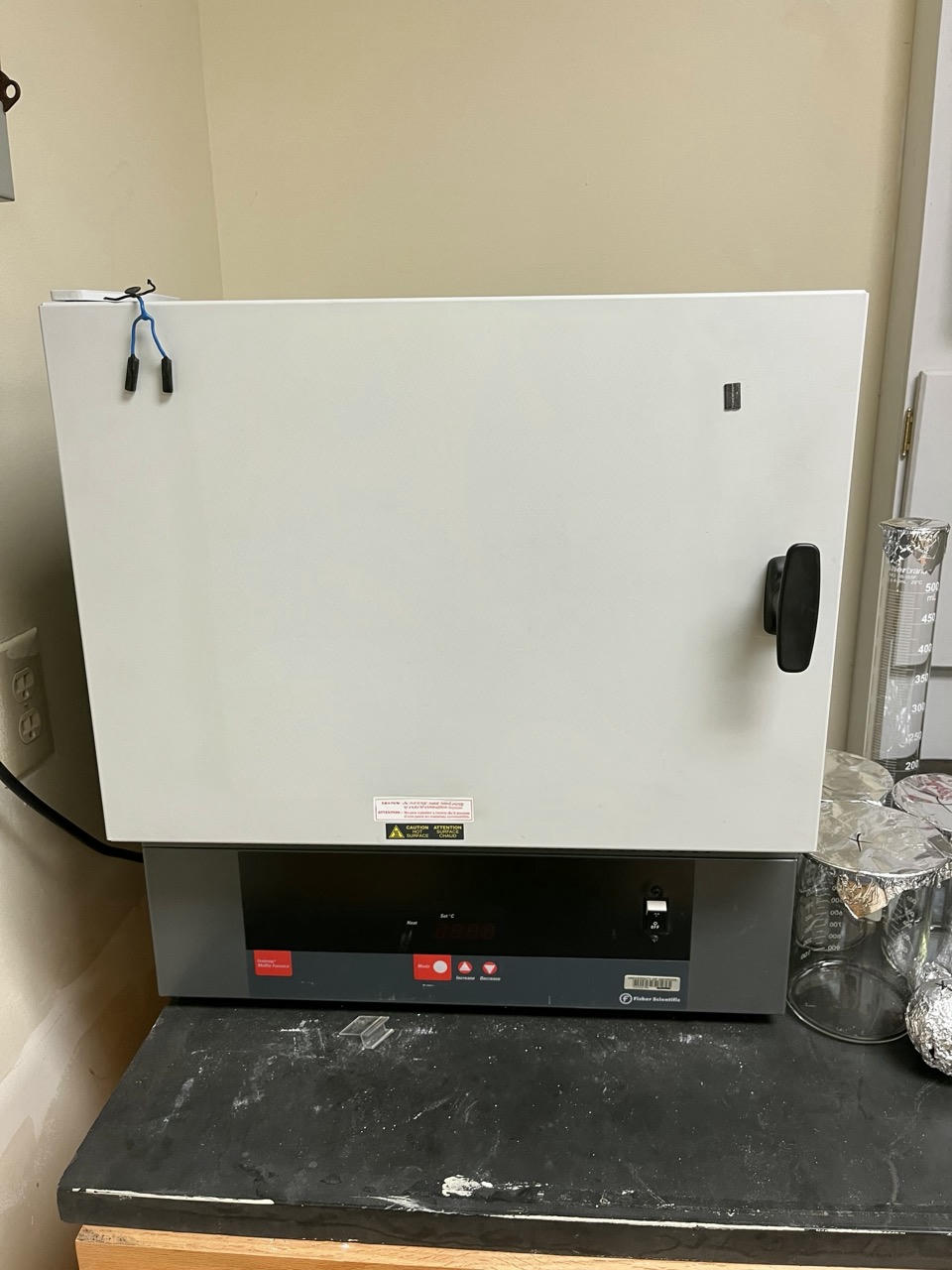
Muffle Furnace

Fisher Scientific Isotemp Muffle Furnace

Ash

We routinely use this muffle furnace to bake our glassware at 450°C to clean and remove any possible organic contaminants.